
Psychedelic Trials, Teaching, and Consulting
For clinicians, training programs, research teams, clinics and clinicians preparing for psilocybin approval, and media.
Last updated: September 2026
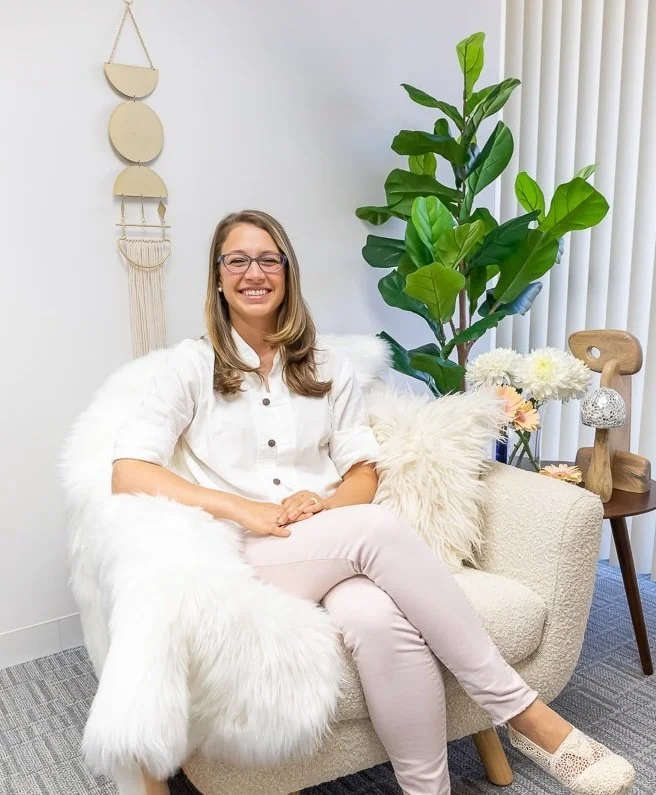
Hello! I'm Patricia Pop, a board-certified psychiatrist licensed in California, working in psychedelic medicine as a Phase 3 trial facilitator, a writer of clinician education, and a teacher.
I've facilitated on two Phase 3 trials of psilocybin and a psilocin analog, COMPASS Pathways COMP005 and Cybin/Helus EMBRACE, and I am writing the medical modules on psilocybin and psychedelic prescribing for Strata Mental Health. I trained in Ketamine-Assisted Psychotherapy in 2021 and completed the CIIS Center for Psychedelic Therapies and Research certificate in 2024.
Most of this work happens outside my own practice, in research protocols and training programs, because the substances I'm most interested in aren't yet legal to offer clinically in California.
My experience ranges from psychological support and psychotherapy (in trial facilitation and psychotherapy training as well as informed by personal experience) to medical considerations: screening, contraindications, interactions, tapers, safety monitoring, what a REMS will demand.
If you're a patient: what I can and can't offer clinically is a separate and more careful conversation, and you can find that here.
My position as a bridge
I often have a foot in both worlds and it isn't always comfortable. These are: psychotherapy and prescription, psychological and medical, Western evidence based medical models and diverse shamanic and mystical traditions.
I'm excited about what these medicines have the potential to do (in well matched hands and contexts - which are paramount), and I follow closely enough to respect where the enthusiasm may outrun the evidence. Sometimes, working outside of clear evidence is part of the art of medicine and psychotherapy - but I also believe in being honest and humble about when that is happening vs over-reaching what informs us from those systems. My working position is that it's sometimes fine to move ahead of the data. What isn't fine is doing it without saying so.
Most of what I teach comes back to this: how to hold a real clinical decision when the literature is thinner than everyone wishes it were (for now).
Reviews
“The presenters' passion, curiosity and creativity come through in an atmosphere of care and what feels like deep interest in this work. The content is captivating and feels to have the power of the moment infused throughout.”
-Alchemy trainee, Ketamine Assisted Psychotherapy for Therapists“What an incredible start to this course, I especially loved the dedication to sharing the history of this medicine and the overview of how this all works. It made me feel very held and supported as we begin to understand the power of this treatment.”
-Alchemy trainee, Ketamine Assisted Psychotherapy for Therapists“The first class was absolutely amazing. My perception of ketamine and usefulness has already grown so much. I enjoyed the content, the level of expertise of the presenters, and think that it was a great introduction to the topic.”
-Alchemy trainee, Ketamine Assisted Psychotherapy for Therapists“5 Stars on everything - from the information provided before hand, the music and welcome while joining and the presentation and presenters. I love taking trainings to learn and these 2 hours felt so grounding. The information was so easy to take in and understand with how it was shared and I am SO excited to continue learning over these next seven weeks! :)”
-Alchemy trainee, Ketamine Assisted Psychotherapy for TherapistsWork with me
For teaching, curriculum writing, speaking, educational consulting, or trial work: drpop@patriciapopmd.com
What I can help with
Consulting, curriculum writing, and teaching are remote and available nationally and internationally.
Screening and safety. Medical and psychiatric screening criteria, contraindications, risk stratification, exclusion logic, safety monitoring, and their grey zones. I teach and write about how to think through these. I don't design or sign off on clinic protocols.
Medical curriculum and module writing. Prescriber-facing content written by a physician who also facilitates sessions directly.
Medication interactions and pre-treatment tapers. Serotonergic interactions, hyperbolic tapering, what actually needs to come off and what doesn't.
Ketamine and KAP training for therapists and prescribers.
Trial facilitation
Speaking, lectures, and CE-track teaching
Media and expert commentary
I'm most useful to programs building educational materials, to training organizations that need medical content written by someone who has actually sat through the sessions, and to teams who want a prescriber's perspective informing the materials they're building. I also take one-off speaking and lecture invitations. Ask me about anything adjacent.
Contact: drpop@patriciapopmd.com
Reviews
“Very well knowledgeable presenters, experienced and coming from a good heart, thank you!”
-Alchemy trainee, Ketamine Assisted Psychotherapy for Therapists“Really excellent time management for this and the other sections, training felt responsive to participants and balanced lots of history/info with the personal experience”
-Alchemy trainee, Ketamine Assisted Psychotherapy for Therapists“Such helpful info and warmly, skillfully presented. The content was really robust and well-presented.”
-Alchemy trainee, Ketamine Assisted Psychotherapy for TherapistsExperience
Psychedelic Research Trials
COMPASS Pathways COMP005 (2024–2026)
COMPASS-trained Level IV facilitator on the Phase 3 trial of COMP360 synthetic psilocybin for treatment-resistant depression, based in San Diego, running roughly one to two dosing sessions a month across the study. The work spanned preparation (rapport, education, and the mindfulness-based "method of inquiry"), facilitation during the medicine sessions, the start of integration, and the part nobody puts on a CV: questionnaires, recordings, and the constant small negotiation between being a human being in the room and meeting the study's rules. Monthly facilitator coaching meetings on complex cases and role plays, which is probably where I learned the most.
Cybin / Helus EMBRACE (2025–2026)
Co-facilitation on the Phase 3 study of CYB003, a deuterated psilocin analog, as adjunctive treatment for major depressive disorder in people already on a stable antidepressant. Psychological support ran through the EMBARK model, which is a noticeably different job from the COMPASS side: less of the mindfulness-based method of inquiry, more structural scaffolding, and more room for the therapist's own natural skillset to come into the room. Sitting inside two trial models back to back taught me more about what psychological support actually is than either would have alone.
Microphenomenology of ibogaine
A microphenomenology study of ibogaine in healthy volunteers is in development, and I'll be involved in the project and conducting the interviews. Micro-phenomenology is a method for getting at the fine grain of an experience that people usually can't report directly, and I'm curious what it surfaces about a substance described so far mostly in broad strokes.
Teaching and clinician education
Strata Mental Health (2026–present)
I am writing medical modules on prescribing considerations for psilocybin, psilocybin derivatives, and other psychedelics for Strata, a clinician training and implementation company founded by the team that built and ran the therapist training program for the COMP360 trials, and now selected by Compass Pathways to develop the clinician training systems for COMP360 delivery. My first module covers principles of medical and psychiatric screening: contraindications, medication interactions, risk assessment, patient selection, safety monitoring. It treats the three regulatory models comparatively (FDA/REMS, the Oregon and Colorado facilitator model, and state medical psilocybin laws). My aim is teaching clinicians how to think about a case rather than handing them a checklist.
Alchemy Community Therapy Center (2023–present)
Dr. Will Barone and I have co-taught the intro to clinical KAP training for therapists two or three times a year since 2023, which by now is most of a decade's worth of cohorts between us. It covers history and context, pharmacology, regulatory boards, indications, routes, dosing, and the practical questions therapists actually arrive with. Alchemy is a nonprofit sliding-scale clinic and training center in Oakland offering the lowest-cost ketamine therapy in the Bay Area, which is most of why I keep saying yes to this one. Will has been my mentor since 2021.
CIIS Center for Psychedelic Therapies and Research
I teach the Intro to Ketamine for Mental Health lecture in the CIIS Center for Psychedelic Therapies and Research (CPTR) certificate program.
Writing and resources
ketamineprep.com came out of the ketamine individual and group work, when I noticed I was reassembling the same explanation for every patient and every co-facilitator. It gathers what I'd want a patient to know before a session and what I'd want a clinician to have on hand. Not a replacement for real preparation, but something both people can point at.
I also write about psychedelic mechanism, evidence quality, and clinical decision-making on my blog.
Training and credentials
MD, Columbia University.
Psychiatry residency, Stanford University.
Board-certified in psychiatry, licensed in California.
Ketamine-Assisted Psychotherapy since 2021, beginning with an apprenticeship under a psychologist and a psychiatrist, co-leading cases for about six months before working independently. (Most KAP training is didactic. Apprenticeship models came first, in indigenous and underground traditions, and I think the field needs far more of that than it currently has.)
Science of Psychedelics Course by Erica Zelfand 2021
Polaris Modules for Ketamine Assisted Psychotherapy 2021-2023
CIIS Center for Psychedelic Therapies and Research certificate, May 2024
COMPASS Pathways Level IV facilitator training 2024
EMBARK psychotherapy model 2025
FAQs
Common questions
Does Dr. Pop provide psilocybin or MDMA therapy?
No. Psilocybin and MDMA are not legal to provide clinically in California, and her work with them happens inside approved research protocols rather than in her practice. Ketamine is the only substance with psychedelic potential she can currently offer, through Ketamine-Assisted Psychotherapy. Patient-facing detail is here.
What is her experience with psilocybin clinical trials?
She has facilitated on two Phase 3 trials: COMPASS Pathways COMP005 (COMP360 synthetic psilocybin for treatment-resistant depression, 2024 to 2026), as a COMPASS-trained Level IV facilitator, and Cybin/Helus EMBRACE (CYB003, a deuterated psilocin analog, for adjunctive treatment of major depressive disorder, 2025 to 2026), co-facilitating with the EMBARK model.
Can she help an organization develop psychedelic clinical education?
Yes. She writes prescriber-facing medical modules for Strata Mental Health, teaches in the CIIS CPTR certificate program, and co-teaches clinical Ketamine-Assisted Psychotherapy training for therapists. Her consulting work is educational and curricular, not clinic operations or protocol design. Consulting and teaching are remote, nationally and internationally. Inquiries go to drpop@patriciapopmd.com.
Is she available for speaking, teaching, or clinician training?
Yes. She writes medical and prescribing modules on psilocybin, psilocybin derivatives, and other psychedelics for Strata Mental Health, teaches the Intro to Ketamine for Mental Health lecture in the CIIS Center for Psychedelic Therapies and Research certificate program, and has co-taught clinical Ketamine-Assisted Psychotherapy training for therapists at Alchemy Community Therapy Center in Oakland since 2023.
What psychedelic training does she have?
Ketamine-Assisted Psychotherapy training since 2021 through an apprenticeship model, the CIIS Center for Psychedelic Therapies and Research certificate (May 2024), COMPASS Pathways Level IV facilitator training (2024), and training in the EMBARK psychotherapy model (2025). She is a board-certified psychiatrist with an MD from Columbia University and psychiatry residency at Stanford University.
Where is she based?
Half Moon Bay, California. Her psychiatric practice is telehealth across California, and her teaching, consulting, and trial work is not limited by location.
More questions? Please email me at drpop@patriciapopmd.com